
Toyota Supra Mk IV (A80): The Japanese Masterpiece of Fast & Furious

A Sports GT Born from Motorsport: History and Design
The Toyota Supra Mk IV was launched in 1993, after an intense development period focused on pure performance. Toyota's clear goal was to make this Supra a true world-class sports car, able to compete with the best GTs of the era, notably entry-level Porsches and Ferraris.
To achieve this, the Japanese engineers aggressively cut weight compared to the previous generation, using aluminum for the hood, the roof (on the Targa version), the spoiler (wing) and some suspension parts. The result was a shorter, lighter and much more aerodynamic car, defined by its flowing silhouette and, above all, its distinctive massive rear wing, which became its trademark.
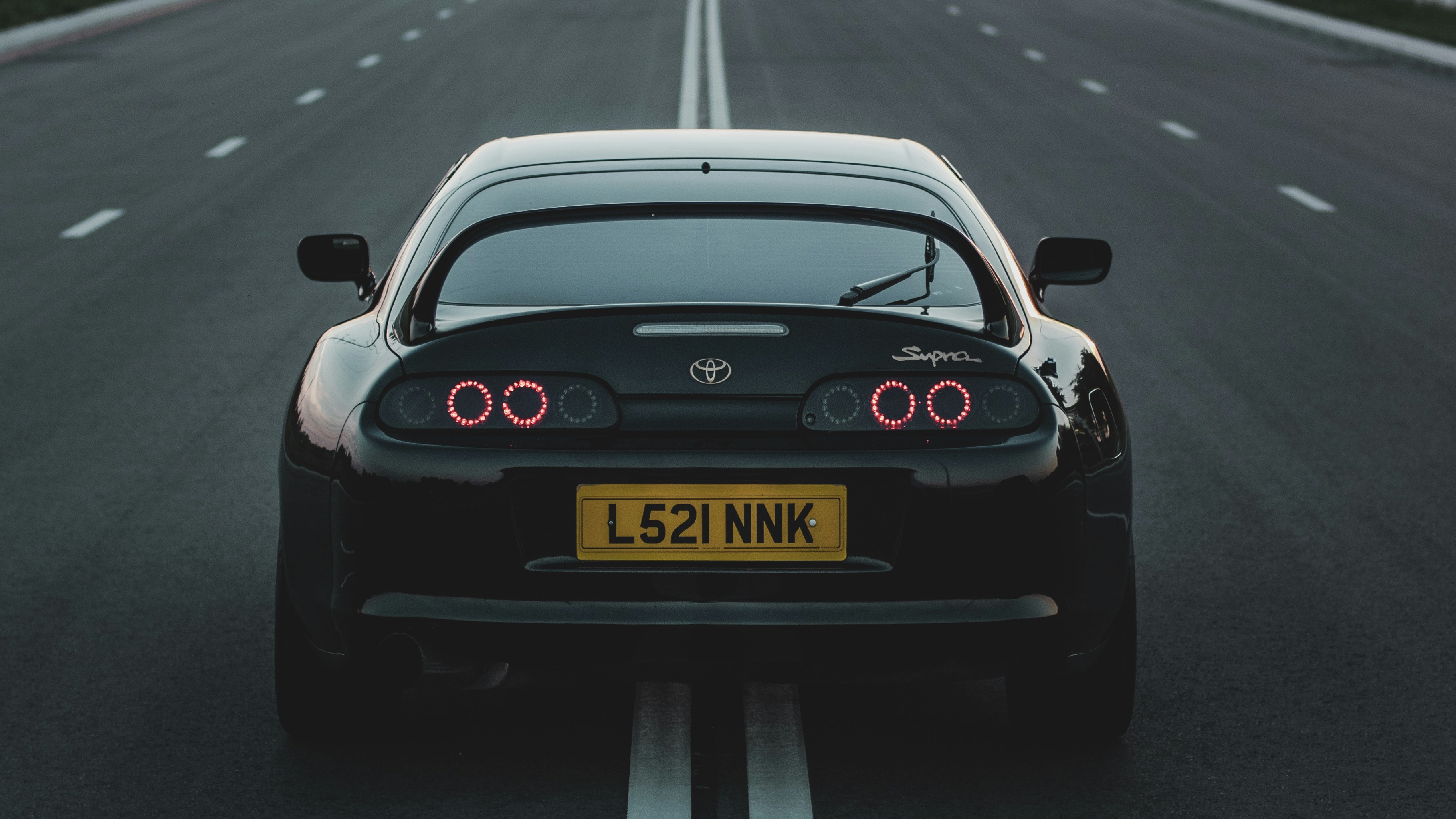
Photo by Dovydas Šimeliūnas on Unsplash
Technical Specifications: The Power of the 2JZ
The Supra Mk IV's legendary reputation doesn't rest on its design, but on the mechanical jewel housed under its long hood: the 2JZ-GTE engine. This engine is the reason the Mk IV is still revered by tuners around the world.
-
Engine: Inline-six, 3.0 liters (2997 cm³), code 2JZ-GTE.
-
Power (Twin-Turbo JDM/EU version): Approximately 280 hp (in Japan, due to a "gentlemen's agreement") or 320 hp (in Europe and the United States).
-
Transmission: 6-speed manual (V160 Getrag) or 4-speed automatic.
-
Forced induction: The Twin-Turbo model used two sequential turbochargers to eliminate turbo lag and deliver phenomenal torque.
The 2JZ quickly became famous for its overbuilt cast-iron engine block and its extraordinary durability. It is known for handling more than 1,000 horsepower with minimal internal modifications, making the Supra the perfect canvas for tuners.
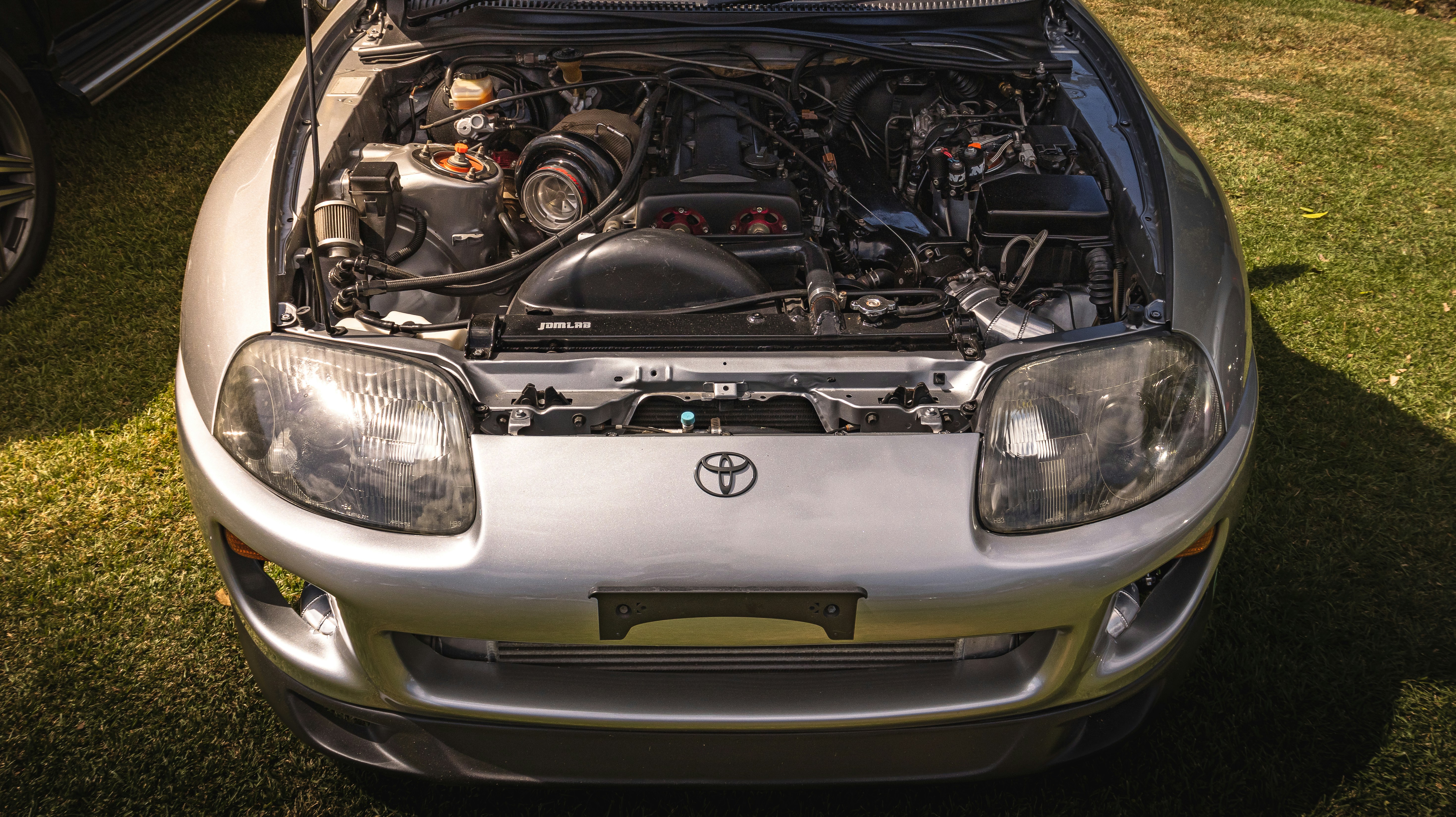
Photo by Gabriel Villaverde on Unsplash
Cultural Influence: A Star of Film and Video Games
As with the DeLorean or the DB5, it was film that propelled the Supra Mk IV beyond enthusiast circles.
-
Fast & Furious (2001): The orange Supra, driven by Paul Walker (Brian O'Conner), became an instant icon. The memorable highway race against a Ferrari cemented its "supercar killer" status. The Supra is often considered the most iconic car of the franchise.
-
Video Games: It is a staple of racing and tuning simulation games, notably the Gran Turismo series, which highlights its performance and modification potential.
This media exposure, combined with the end of production in 2002, sent its value soaring. Today, examples in good condition sell for record prices, making the Mk IV one of the most expensive and sought-after Japanese cars of its generation.
The Toyota Supra Mk IV is not just a relic of the '90s; it is a lasting symbol of raw power, mechanical reliability and the era when Japanese manufacturers dominated performance engineering.
Today, the Toyota Supra MKIV is an icon both in film and in car culture. Notably, YouTuber Farine de Blé recently used the famous 2JZ for an engine swap in a Volvo. The kind of project we'd like to see more often.
Share this content